⏱️ 6 min read
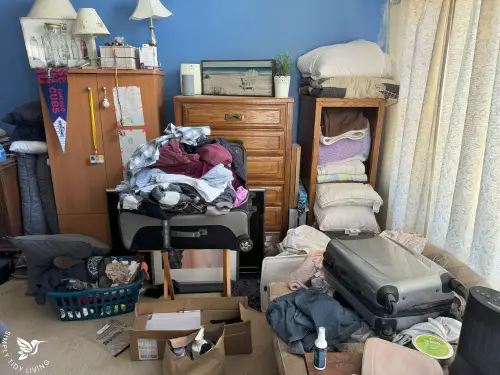
You’re standing in your kitchen, staring at the counter—a pile of unopened mail, random receipts, someone’s dirty plate, maybe a couple of half-empty water bottles, and… is that gum? You think, “I should deal with this.” But instead, you walk away. It’s just too much.
Sound familiar? You’re not lazy, messy, or bad at this. Feeling overwhelmed by clutter is normal, especially if you have ADHD, decision fatigue, or struggle with where to begin.
The good news? Decluttering doesn’t have to be stressful. Let’s start small, keep it simple, and use strategies that work with how your brain functions.

Why Decluttering Feels Overwhelming (And How to Make It Easier!)
Most people don’t struggle with decluttering itself—they struggle with:
✓ Decision fatigue – Too many choices = shutdown.
✓ Emotional attachments – Guilt, memories, and “what if I need this?”
✓ Perfectionism paralysis – Feeling like you have to do it right or not at all.
✓ ADHD-related struggles – Out of sight, out of mind; distraction mid-task; mental exhaustion.
If any of these sound like you, you’re not alone. The trick isn’t to push through—it’s to start with small, easy wins that build momentum.
Here’s how. ▼
How to Start Decluttering Without Feeling Overwhelmed
Decluttering isn’t just about “getting rid of stuff.” The SHINE System makes decluttering easier by focusing on clarity, decision-making, and routines that prevent clutter from coming back.
In this post, we’re using ADHD-friendly strategies to help you get started. These steps are designed to be flexible, so you can adapt them to fit your brain and lifestyle.
A No-Stress Approach to Decluttering
Decluttering works best when it’s light, doable, and designed for real life. Instead of trying to “declutter your whole house,” we’re going to start tiny.
✓ Step 1: Find Clutter Hotspots
Most people assume decluttering = finishing a whole space. But ADHD brains (and, honestly, all brains) thrive with small steps and quick visible progress. In this case, what’s not serving you is all-or-nothing thinking, so we are going to start really, really small.
Don’t start with your whole closet or kitchen. Start with:
- One surface (desktop, counter, nightstand)
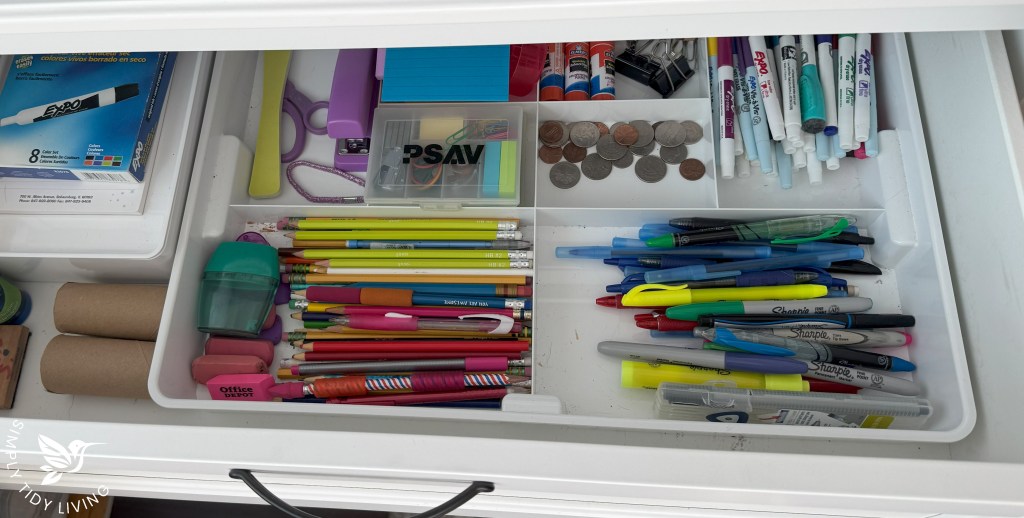
- One drawer (not the whole dresser—just one drawer!)
- 5-minute tasks (throw away 5 things, put 5 items where they belong)
How this helps: Quick, visible progress gives your brain a dopamine boost, making it easier to keep going.
✓ Step 2: Declutter Where You’ll See Instant Results
What matters right now is seeing progress. So, instead of thinking, “I need to declutter the whole kitchen,” start with one tiny problem area that actively frustrates you.
Good starter spots:
- The nightstand covered in random clutter
- Your bathroom counter (goodbye, expired products!)
- The junk drawer (because we all have one)
How this helps: Starting with a space you interact with daily means you’ll see and feel the progress immediately.
✓ Step 3: The Easy Sorting Trick That Makes Decluttering Simple
If making decluttering decisions feels overwhelming, don’t start with “Should I keep this?” Instead, group things into easy categories first.
Quick Sorting System:
- Trash/Expired– Obvious clutter, no guilt (start here!).
- Belongs Elsewhere – Items that go in another room.
- Donate – Gently used but not needed.
- I’m Not Sure – Set a 30-day deadline to decide later!
How this helps: Sorting first reduces decision fatigue—making it way easier to figure out what stays and what goes.
✓ Step 4: What to Keep, What to Let Go Without Guilt
Your current reality is likely that you simply have too much stuff. But I’m not here to tell you to get rid of everything. I want you to keep what serves you (and to let go of what doesn’t—without guilt. Ask yourself these three questions for easier decluttering decisions:
- Would I buy this again today? (If not, it’s probably time to let go.)
- Is this adding value or just taking up space?
- Am I keeping this because of guilt? (If so, let’s rethink it.)
Flame-Specific Strategies:
- Flare (I need to see it!) → Take pictures of your space and use them to evaluate what can go.
- Sparkler (I don’t know where to start!) → Declutter one category at a time to reduce overwhelm.
- Hearth (I can’t get rid of that!) → Keep one memory box for sentimental items.
- Beacon (I need the right plan first!) → Give yourself permission to make imperfect progress.
✓ Step 5: How to Stay Motivated & Actually Finish Decluttering
Sometimes, trusting your instincts means knowing that you can’t do it alone. If staying focused is hard, try:
- Body Doubling – Call a friend while you declutter, stream a “clean with me” video, or talk out loud as you go.
- Music or Timer Trick – Set a 15-minute playlist and declutter for the duration of the songs.
How this helps: External motivation keeps your brain engaged and prevents distraction spirals.
Decluttering in Action: This cluttered kitchen counter was a chaotic drop zone for snacks, pet supplies, and receipts. A quick declutter made a difference, and with a few more minutes another day, everything now has a purpose—and the space feels so much lighter!
Your 10-Minute Decluttering Challenge
Feeling stuck? Try this:
✓ Set a timer for 10 minutes.
✓ Pick one small area (a drawer, a counter, a shelf).
✓ Remove 5 things you don’t need.
✓ Celebrate your progress!
Messy action is still action—small steps lead to big results.
What’s next? Keep the momentum going!
Not sure which decluttering strategy fits you best?
→ Take the Four Flames Decluttering Quiz and discover your decluttering style!
Want accountability and encouragement?
→ Join the Simply Tidy Living Community for support, motivation, and quick decluttering wins!
✓ Final Thoughts
Decluttering doesn’t have to feel impossible. Start small, keep it simple, and go at your own pace.
I’d love to hear from you! Did you try any of these ideas? What worked? What still feels hard?
I’m so proud of you! 🎉